
I Founded a Legal Entity for My Side Project. Then I Dissolved It..
Andreas Schöngruber
March 1, 2026·5 min read
Most side projects live their entire lives as a folder on your laptop and a half-finished README. No legal entity, no formal structure, just you and a domain name you renew every year out of optimism. EventSpotter took a different turn for a while. In March 2025, it became a registered Kulturverein under Austrian law, complete with a chairman, a secretary, a treasurer, and a real bank account. By the end of 2025, we had dissolved it.
The project is still running. This is the story of that detour.
What EventSpotter Is
EventSpotter is an event aggregation platform I started building in 2022. The idea is simple: instead of checking five different venue websites to figure out what's on this weekend, you check one. The platform scrapes events from venues and organizers across Austrian cities, currently covering Linz, Vienna, Graz, Salzburg, and Innsbruck.
Events get auto-tagged by category and genre, so you can actually filter down to what you care about. Favorites, browser notifications, iCal export, posting to social media. It all grew gradually as I added features that seemed useful. Around 3,000 people use it every month now, which still surprises me a little.
It started as scratching my own itch and turned into something with actual users. Classic story.
Why We Founded the Association
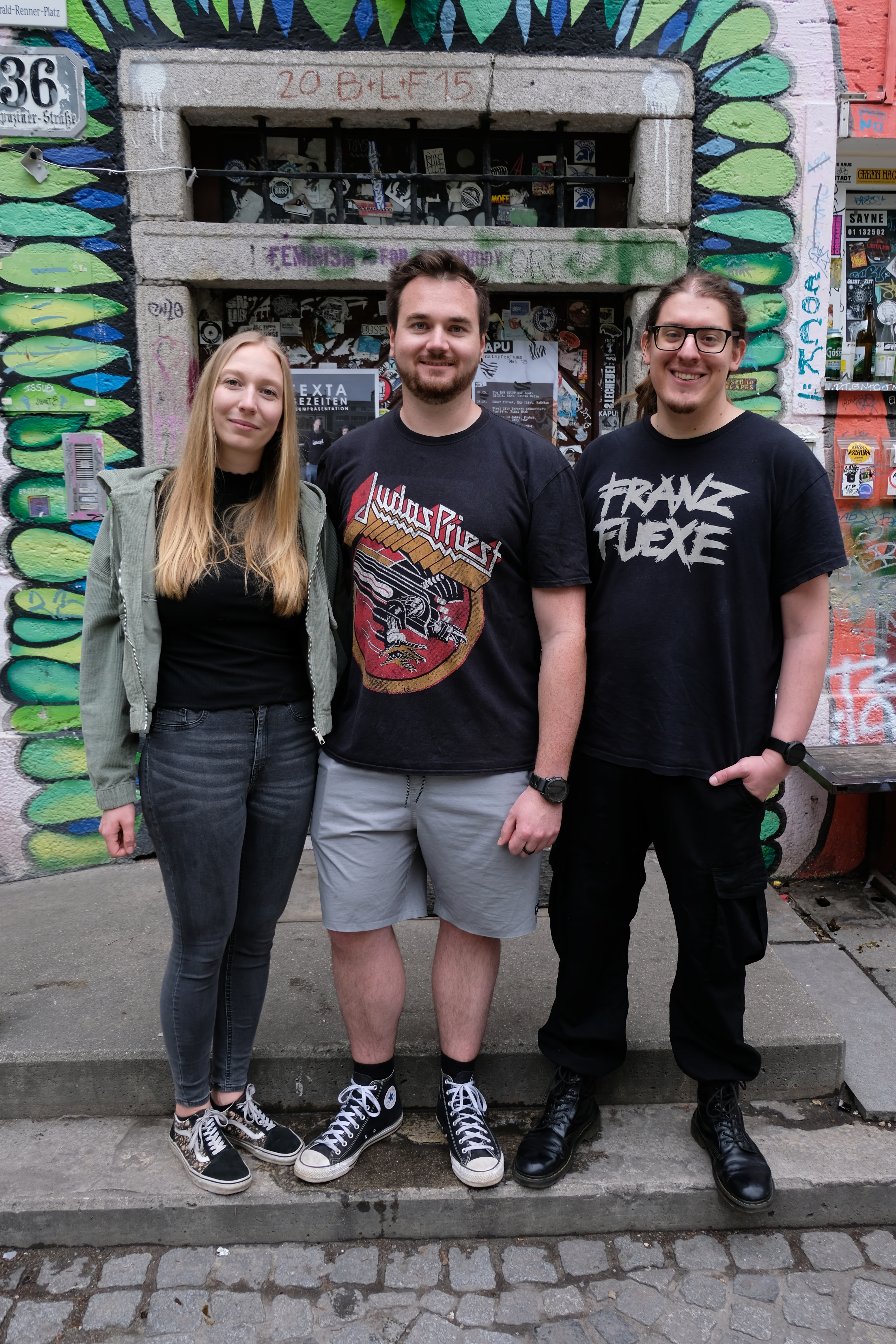
In early 2025, two friends of mine, Julia Burgstaller and Nico Wagnleithner, officially joined the project. They'd been helping out occasionally before, but in 2025 they committed to putting real time into it alongside me. At some point the question came up: should this have some formal structure?
The reasoning made sense at the time. A registered Kulturverein (cultural association) would give the project more legitimacy. It would also let us accept donations more cleanly, since the legal framework around that is cleaner for an association than for an informal group. And it felt like it could open doors to other cultural organizations, associations that might want to collaborate or integrate with what we were building. We also got help from KUPF, an organization that supports cultural associations, which made the whole process much clearer.
We went through the process, filed the paperwork, got registered, and in March 2025 we had a real legal entity. Julia as secretary, Nico as treasurer, me as chairman. It felt like a genuine step forward.
What It Was Actually Like
Honestly? Fine. Nobody was miserable. The founding process itself was interesting, and there's something undeniably satisfying about having a proper stamp on a document with your name on it.
There were moments where the structure clearly made a difference. I reached out to Oeticket, one of Austria's biggest ticketing platforms, about a potential partnership. They were interested, sent over their standard contract, and one clause immediately stood out: we could only link to Oeticket, no other ticket pages. That wasn't going to work for a platform that aggregates from everywhere. I flagged it, they said they'd need to check with their CEO and it probably wouldn't fly. Then they came back with the clause removed. We voted on the partnership as an association and declined in the end, but getting a major ticketing platform to amend their standard contract for a side project is not nothing.
But the overhead crept in quietly. A Kulturverein in Austria requires its own bank account, which means bank account fees on something that generates zero revenue. Not catastrophic, just a recurring cost for a thing that wasn't providing a matching recurring benefit. The formality of the structure also started to feel a bit at odds with how the project actually ran: three people working asynchronously whenever we had time, not holding formal meetings or managing anything beyond what we were already doing.
Why We Dissolved It
By late 2025 the calculus was clear. The tax situation was the biggest concrete factor: an association running at a loss generates no tax advantage over just running it informally. A company might have some upside there, but an association at a loss? No difference.
The bank account fees were a small but real cost, and we weren't holding general assemblies or running structured member activities. We were maintaining a legal structure that had no actual role in how the project operated. The cultural network we hoped to build never materialized, not because the idea was bad, but because it needed sustained outreach work that wasn't in the budget.
So we dissolved it. Officially on 31 December 2025. Clean end to the calendar year, which felt appropriate.
The Project Today
EventSpotter is running well. More venues keep coming in, features keep improving. None of that was affected by the association story. The platform was always separate from the legal wrapper around it.
I keep adding cities and venues as I find the time. The scraping infrastructure has gotten more reliable over the years. There are always things on the backlog. It's the kind of project where the work is never done, which I think is why it's still interesting to work on.
What I'd Tell Someone Considering This
If you're thinking about forming an association for your side project, the question to ask is whether you actually need what an association provides. For us, the theoretical benefits (legitimacy, donations, network) didn't translate into real-world impact, and the overhead was concrete and immediate.
A Kulturverein makes sense if you're running events yourself, managing members, applying for cultural funding, or doing enough volume that the structure serves a genuine purpose. It makes less sense if you're a small team building a platform and the association is more of a signal than a tool.
That said: I'm glad we did it. Founding a legal entity is a genuinely interesting experience, and "I once founded a cultural association" is a fun thing to be able to say. We tried something, it didn't serve us, we undid it. No drama.
The project keeps going. That's the part that matters.